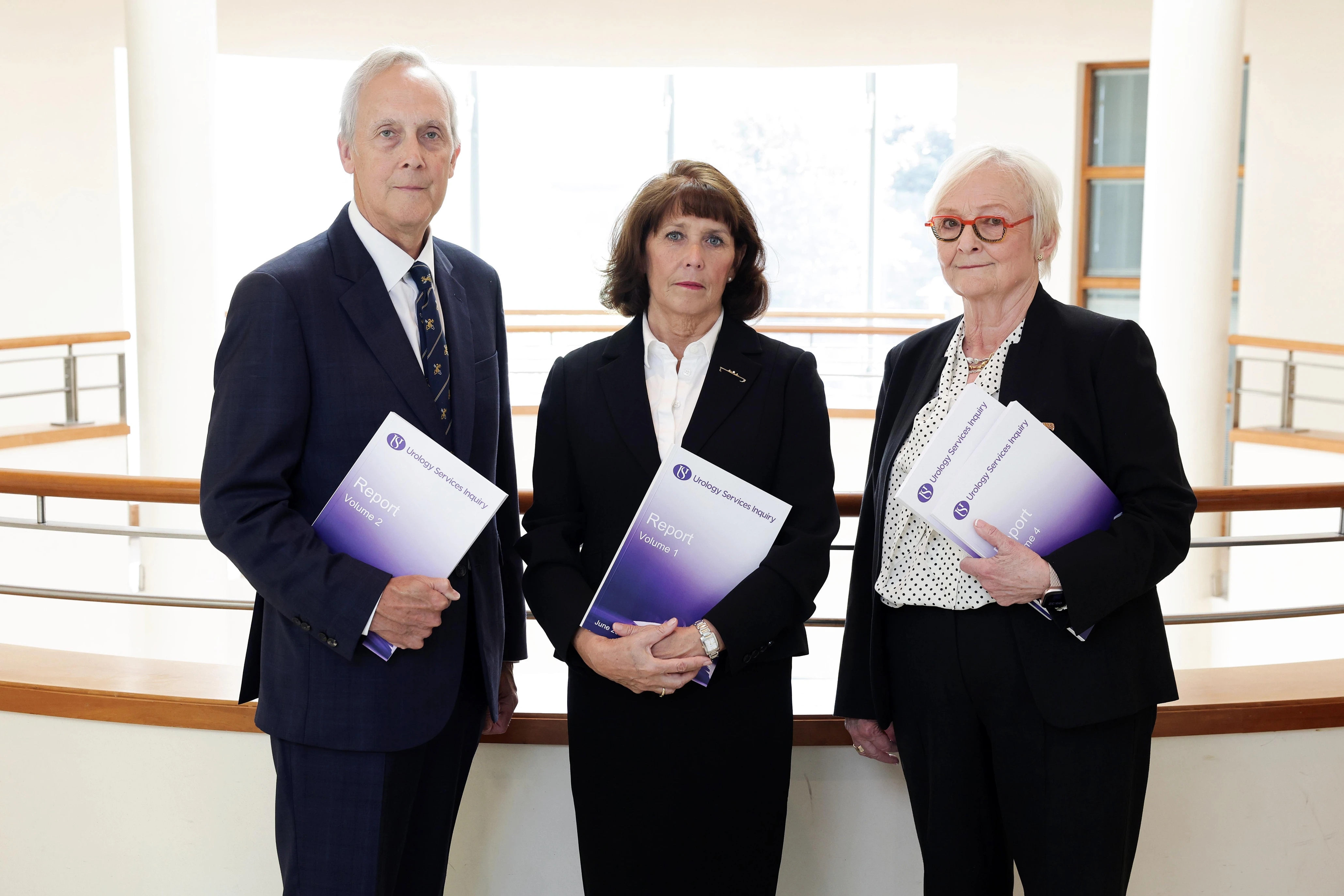
Key findings from the Urology Services Inquiry report include:
• Systemic failures in governance, oversight, leadership, culture and Board accountability. • Patients suffered serious harm, including failures in diagnosis, treatment and follow up. • Repeated missed opportunities to act on a doctor in difficulty, with risks not addressed. • Weak systems failed to identify and act on risk early. • Three core recommendations: patient safety must be primary purpose, strengthen leadership, and improve use of data to identify and act on risk.
The Urology Services Inquiry has today published its report into patient care within urology services at the Southern Health and Social Care Trust (the Trust). The Inquiry identified systemic failures in governance, oversight, leadership, culture and Board accountability which created significant risks to patient safety and, in some cases, resulted in patients being seriously harmed.
The report sets out clear recommendations to strengthen leadership, governance and culture, and to ensure these failures are not repeated.
Established following a series of Serious Adverse Incidents (SAI) involving one consultant urologist, the Inquiry examined how that harm occurred, why it was not fully recognised, and what changes are required to ensure safer care in the future.
Launching the report, Chair of the Inquiry, Christine Smith KC, said the findings were rooted in the experiences of patients and families who had been let down by the system, commenting she said: “At its heart, this report is about patients who were badly let down. They faced delays in diagnosis and treatment, including cancer care, poor communication, and too often they were left without the clear, high-quality, timely interventions they should have expected.
“Our task was to understand how that harm occurred and why it was not recognised or addressed. The Inquiry makes clear that the deeper causes were systemic. Weak governance, poor oversight, ineffective escalation and underdeveloped leadership created the conditions in which patients could come to harm. Put simply, there was a failure to recognise risk early and to respond to it properly.”
The patients who were reviewed, were under the care of Mr Aidan O’Brien. While the Inquiry found that he was a skilled surgeon who did not set out to cause harm, the Trust failed to recognise that he was a doctor in difficulty and failed to manage him appropriately.
While one clinician was the catalyst for the Inquiry, the report makes clear that failings were much more deep rooted across the Trust.
Christine Smith KC, added, “Issues about Mr. O’Brien’s practice were known for years, but they were never satisfactorily addressed. Warning signs were missed, and opportunities to act were not taken soon enough. However, this report is not simply about one doctor. It highlights wider systemic failings, where risks were not escalated, concerns were not acted upon, and opportunities to prevent harm were missed across the Trust. Stronger systems of governance would have enabled earlier detection and more effective intervention.”
The weaknesses in governance, leadership and culture, included undue deference to seniority, professionals working in silos, and failures of medical leadership across a range of levels who were not aligned around a clear and consistent focus on delivering safe, high-quality care.
The report is particularly critical of the Trust Board. It found that the Board did not fully understand or discharge its responsibilities and did not adequately fulfil its role in driving culture, strategy and improvement. There was no effective assurance concerning the quality of care, and insufficient challenge or critical oversight.
The Inquiry recognises that improvements have been made since these issues came to light, including changes within the Trust and wider work led by the Department of Health.
However, it is clear that further, sustained and transformational change is required. The report sets out a series of recommendations aimed at strengthening patient safety across the system which are not limited to one service but are intended to drive improvements across healthcare in Northern Ireland and more widely. They are:
• the formal declaration of patient safety as the dominant and primary purpose of healthcare • a comprehensive leadership development programme across the system • sustained investment in data and information
In conclusion, Christine Smith KC said, “Our recommendations are not only about addressing what went wrong in one service. They are about strengthening leadership, governance, culture and accountability across the system, so that patient safety is not simply an expression, but the clear and constant priority.
“This requires greater insight into patient outcomes, harm, experience and service performance, with risks identified earlier and acted on more effectively. While we recognise the progress that has been made, further change is required. We urge those responsible for implementing these recommendations to embrace this report as an opportunity to deliver meaningful, lasting improvements in patient safety.”
Some cookies are necessary for us to manage how our website behaves while other optional, or non-necessary, cookies help us to analyse website usage. You can Accept All or Reject All optional cookies or control individual cookie types below.
You can read more in our Cookie Notice
Functional
These cookies enable core functionality such as security, network management, and accessibility. You may disable these by changing your browser settings, but this may affect how the website functions.
Analytics cookies
Analytical cookies help us to improve our website by collecting and reporting information on its usage.
Third-Party Cookies
These cookies are set by a website other than the website you are visiting usually as a result of some embedded content such as a video, a social media share or a like button or a contact map