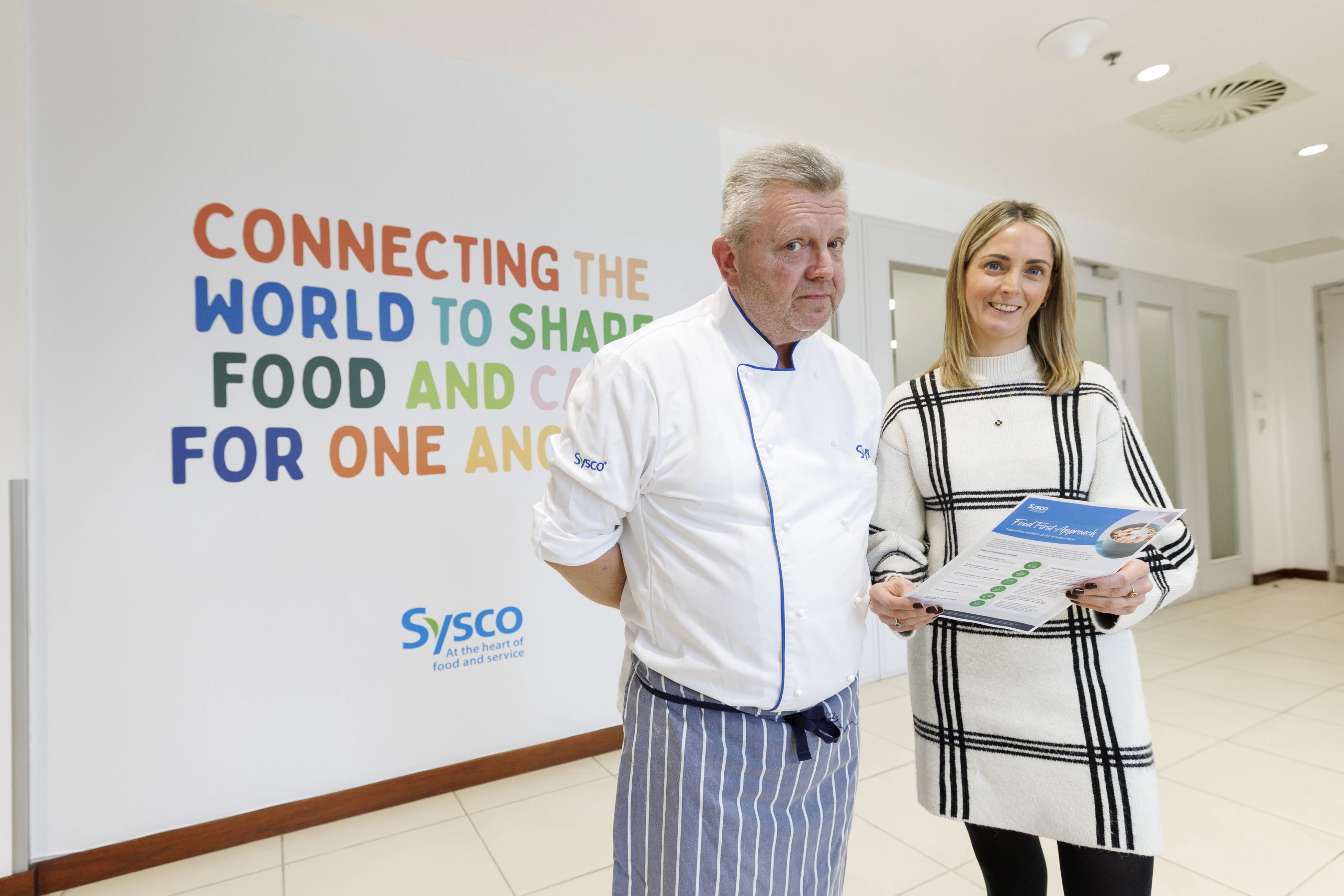
Sysco, Ireland’s largest foodservice supplier, has brought together care providers to explore practical, Food First advice to help address malnutrition among at-risk residents in care home settings. The event coincides with Malnutrition Awareness initiatives taking place across Europe throughout the month of November.
According to the Irish Nutrition and Dietetic Institute (INDI), up to 42% of residents in Irish nursing homes are considered at risk of malnutrition.*
Hosted in Sysco Ireland’s Development Kitchen in Dublin, the event explored how a food first approach can help providers increase nutritional intakes through familiar food and practical adaptations.
Speaking at the event, Dr Catherine Logan, Nutritionist, Sysco Ireland, said:
“Sysco wanted to bring care professionals together to share knowledge, practical experience and ideas around how a food first approach can support those at risk of malnutrition.
“A food first approach aims to support an at-risk individual meet their nutritional requirements. It involves enriching the diet with nutrient-dense food fortifiers and encouraging the consumption of nutrient-dense meals, snacks, and drinks.
“At its heart, food first is about practical, achievable adaptations, using familiar everyday foods, to help increase nutritional intake and support better health-related outcomes. It was encouraging to see so many care professionals engaging with the topic and sharing experiences and insights from their own settings.”
Through expert-led presentations delivered by Dr Catherine Logan, and live cooking demonstrations, from Sysco Development Chef, Simon Hudson, attendees explored how familiar recipes can be adapted using nutrient-dense ingredients and simple techniques to increase nutritional intake, while ensuring meals remain enjoyable, accessible and appealing to residents.
Sandra Wilkinson, Communications Manager, Irish Nutrition & Dietetic Institute added:
“Malnutrition is an under recognised issue for older people living in nursing homes and can have a significant effect on residents health, wellbeing and quality of life. We are pleased to work with Sysco in developing practical resources and providing catering expertise to help nursing homes adapt menus for residents at risk of malnutrition. Simple, effective food fortification ideas can make a real difference, helping to increase the nutritional value of everyday meals without necessarily increasing portion sizes.”
Peter Rabbitte, National Channel Manager for Education, Healthcare and Retail at Sysco Ireland, said:
"Food plays a vital role in supporting health and wellbeing, particularly for vulnerable residents within care settings. As a trusted partner to the healthcare and care home sectors, we are committed to helping our customers translate nutritional advice into practical action.
"The event provided an opportunity to share knowledge, showcase practical solutions and encourage conversations around how collectively we can support better nutritional outcomes for those most at risk."
The event forms part of Sysco Ireland’s wider commitment to supporting customers across the healthcare and care home sectors, combining specialist nutrition knowledge with practical culinary expertise to help address nutritional challenges in care settings.
Some cookies are necessary for us to manage how our website behaves while other optional, or non-necessary, cookies help us to analyse website usage. You can Accept All or Reject All optional cookies or control individual cookie types below.
You can read more in our Cookie Notice
Functional
These cookies enable core functionality such as security, network management, and accessibility. You may disable these by changing your browser settings, but this may affect how the website functions.
Analytics cookies
Analytical cookies help us to improve our website by collecting and reporting information on its usage.
Third-Party Cookies
These cookies are set by a website other than the website you are visiting usually as a result of some embedded content such as a video, a social media share or a like button or a contact map